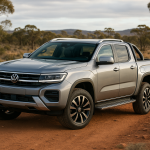
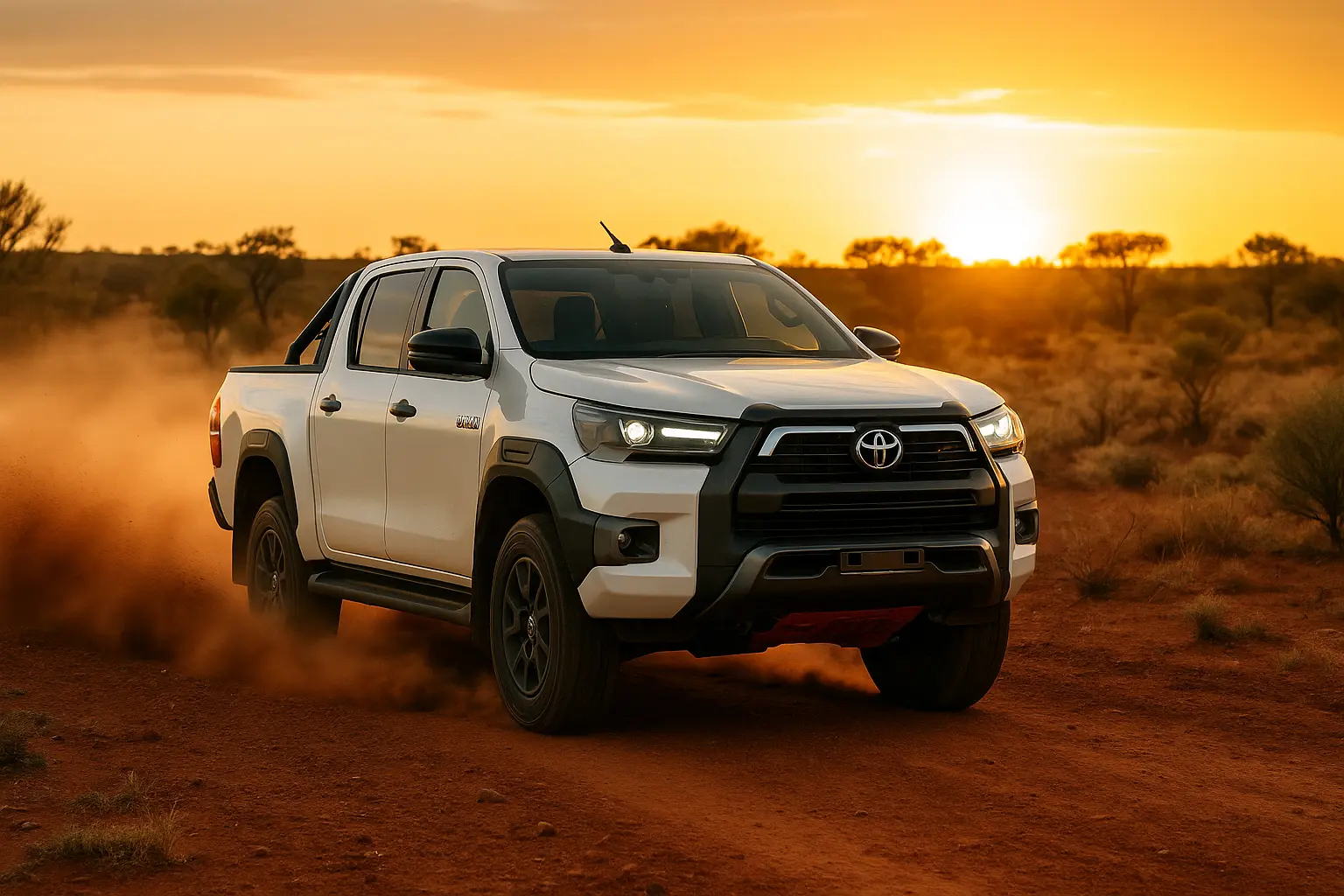
Few rivalries in the Australian automotive scene run as deep as Toyota Hilux vs Ford Ranger. Both dominate the dual-cab ute segment, appealing to tradies, farmers, off-road enthusiasts, and families alike. With both models evolving into highly refined, tech-filled and performance-oriented machines, choosing between the two has never been tougher.
This comprehensive comparison explores everything that matters — power, performance, towing, pricing, interior features, technology, reliability, and running costs — to help you decide which one deserves a place in your driveway.
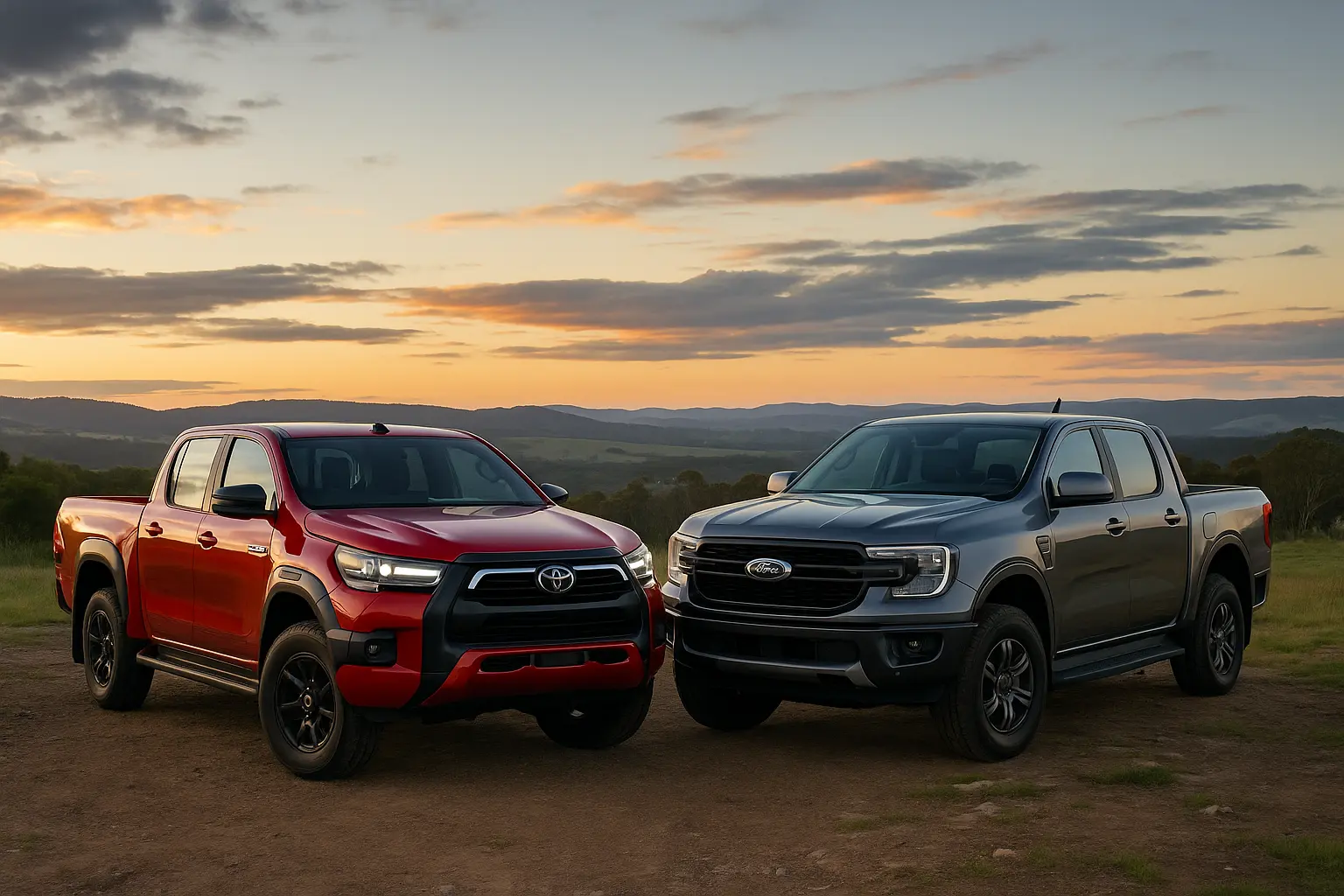
Overview: The Ute Icons of Australia
Both the Hilux and Ranger have evolved far beyond their workhorse roots. While Toyota continues to bank on its unmatched reputation for reliability and durability, Ford has transformed the Ranger into a global benchmark for performance, comfort, and technology.
The 2025 models build on their legacy — the Hilux now offers hybrid-ready efficiency and stronger safety tech, while the Ranger takes refinement and connectivity to a new level, thanks to Ford’s latest global platform.
Toyota Hilux 2025 – Overview
- Proven durability with Toyota’s quality assurance
- Upgraded diesel engine with improved torque
- Available in multiple trims — from work-ready Workmate to luxurious Rogue and GR Sport
- Focused on reliability, towing strength, and low maintenance
Ford Ranger 2025 – Overview
- Built on Ford’s advanced T6.2 platform
- Powerful engine options, including the 3.0L V6 turbo-diesel
- Outstanding interior design with SYNC 4 infotainment system
- Exceptional on- and off-road capability, with a car-like drive experience
Engine and Performance
Toyota Hilux
The Hilux’s 2.8-litre four-cylinder turbo-diesel remains a trusted performer, producing around 150kW and 500Nm in the higher trims. It’s paired with a six-speed automatic transmission and delivers steady, predictable torque delivery across terrains. While it lacks a V6 option, the Hilux counters with reliability and linear power that rarely disappoints.
In the GR Sport variant, Toyota adds sportier suspension tuning, wider tracks, and enhanced output, giving it better composure on rough tracks and improved cornering on sealed roads.
Ford Ranger
Ford’s 3.0-litre V6 turbo-diesel changes the game. With 184kW and 600Nm, it’s the most powerful mainstream ute in its class. Mated to a 10-speed automatic gearbox, the power delivery is smooth, and towing feels almost effortless. The Ranger also offers a 2.0-litre Bi-Turbo option for buyers wanting efficiency over raw muscle.
Ford’s engineers have fine-tuned the Ranger’s chassis, resulting in a quieter cabin, improved ride quality, and better steering precision. Whether you’re hauling heavy loads or cruising the highway, the Ranger feels like a premium SUV.
Verdict on Performance
The Ranger wins in outright power and refinement, offering stronger torque, smoother shifts, and a more dynamic drive. However, the Hilux counters with bulletproof reliability and predictable handling, making it the more trusted long-term companion.
Off-Road Capability
Australia’s rugged terrains demand true 4x4 prowess — and both utes deliver.
Hilux Off-Road
Toyota’s Hi-Rider and 4x4 trims are built for the bush. With 700mm wading depth, low-range gearing, and rear differential lock, it remains a go-anywhere machine. The Hilux’s solid rear axle and excellent approach/departure angles ensure confident rock climbing and sand performance.
However, the ride can feel firm on corrugated tracks compared to the Ranger’s newer suspension geometry.
Ranger Off-Road
The Ranger’s Terrain Management System (selectable drive modes for sand, mud, ruts, and rock crawl) elevates its off-road credentials. Add to that the 800mm wading depth, hill descent control, and adaptive cruise for trails — it’s the more sophisticated off-roader.
The Raptor variant sits in a league of its own, boasting FOX suspension, twin-turbo petrol power, and rally-bred tuning for high-speed desert runs.
Verdict on Off-Roading
While both are exceptionally capable, the Ranger edges out with advanced tech and smoother ride comfort, while the Hilux remains the tougher, more old-school off-roader that trades comfort for rugged endurance.
Interior, Comfort, and Features
Hilux Cabin Experience
The Hilux’s cabin has improved significantly over the years. The latest models offer:
- 8-inch touchscreen with smartphone connectivity
- Dual-zone climate control
- Heated seats and smart key access (Rogue and GR Sport)
- Toyota’s updated safety suite with adaptive cruise, lane-keep assist, and AEB
Still, the interior design remains functional rather than flashy — focused on practicality and durability.
Ranger Cabin Experience
The Ranger’s interior feels more like a tech-packed SUV. Highlights include:
- Massive 10.1- or 12-inch portrait infotainment screen with SYNC 4
- Wireless Apple CarPlay and Android Auto
- Digital instrument cluster
- Multiple USB-C ports and wireless charging
- Optional leather upholstery and premium audio
It’s easily the most refined ute interior in the market right now.
Verdict on Interior
The Ranger wins on comfort and tech sophistication. The Hilux, however, still appeals to those valuing simplicity and durability — traits prized in heavy-duty environments.
Technology and Safety
Both utes take safety seriously, reflecting Australia’s high standards for commercial and passenger vehicles.
Hilux Safety and Tech
The Hilux offers:
- Toyota Safety Sense suite
- Autonomous emergency braking (AEB)
- Lane departure warning
- Road sign recognition
- Adaptive cruise control
Ranger Safety and Tech
Ford’s suite goes a step further:
- 360-degree camera system
- Intelligent adaptive cruise control with lane centring
- Blind-spot monitoring (covers trailer length)
- Post-collision braking and evasive steering assist
Verdict on Safety
While both are 5-star ANCAP-rated, the Ranger provides more cutting-edge safety tech, particularly for towing and highway driving.
Towing and Payload
Both utes are built for work, and their towing capacities reflect that.
| Specification | Toyota Hilux | Ford Ranger |
|---|---|---|
| Towing Capacity (Braked) | 3,500kg | 3,500kg |
| Payload | Up to 1,000kg | Around 950kg |
| GCM | 5,850kg | 6,400kg |
Both are evenly matched for heavy-duty work, but the Ranger’s V6 engine handles towing with greater ease, especially over long distances or uphill climbs.
Fuel Economy
The Hilux 2.8L diesel returns around 7.9L/100km, while the Ranger’s V6 averages 8.4–8.9L/100km, depending on the variant. However, the Ranger’s efficiency is impressive given its power advantage and larger displacement.
Toyota also hints at a mild-hybrid variant coming soon, promising improved fuel savings for urban use.
Pricing and Variants (Approximate 2025 Models)
Toyota Hilux
- Workmate 4x2: from $26,475
- SR 4x4: from $46,000
- SR5 4x4: from $55,000
- Rogue / GR Sport: up to $73,000+ on-road
Ford Ranger
- XL 4x2: from $36,880
- XLT 4x4: from $58,000
- Sport / Wildtrak: around $67,000–$75,000
- Raptor: around $87,000+ on-road
The Hilux offers a lower entry price, while the Ranger delivers better value in mid- to high-spec trims with richer features.
Reliability and Ownership
Toyota’s reputation for reliability remains unmatched. Hilux owners enjoy:
- Proven long-term durability
- Excellent resale value
- Low maintenance and accessible service costs
The Ranger has improved dramatically in reliability over recent years, with Ford investing heavily in aftersales service and warranty coverage. Ford now offers 5-year unlimited kilometre warranty, aligning with Toyota’s terms.
However, Toyota’s resale strength still gives it a long-term ownership advantage.
Driving Experience and Ride Quality
Hilux
Known for its firmness, the Hilux offers a solid, truck-like ride that suits rugged conditions. It’s stable under load but less refined on daily commutes. Steering feedback is direct but heavy at low speeds.
Ranger
The Ranger feels more car-like and composed. Suspension tuning absorbs bumps better, while the steering is lighter and more precise. The cabin insulation makes highway drives impressively quiet for a ute.
For families or city commuters, the Ranger offers a more relaxing experience, while traditionalists might prefer the Hilux’s old-school sturdiness.
Verdict: Which Ute Should You Buy in 2025?
If you value bulletproof reliability, low running costs, and proven off-road toughness, the Toyota Hilux remains a safe, dependable pick. It’s the ute that will outlast harsh conditions and hold its resale value for years.
If you want refined performance, SUV-like comfort, and cutting-edge technology, the Ford Ranger is the clear winner. It’s more powerful, more comfortable, and more enjoyable to drive daily.
In simple terms:
- Choose the Hilux if reliability and simplicity matter most.
- Choose the Ranger if you want performance, refinement, and modern tech.
Final Thoughts
The Hilux and Ranger dominate Australia’s ute landscape for good reason — they’re both tough, capable, and endlessly versatile. But as utes continue to evolve into lifestyle vehicles as much as workhorses, the Ford Ranger’s blend of power, technology, and comfort gives it the upper hand in 2025.
Still, the Toyota Hilux’s reputation for toughness, lower ownership costs, and durability ensures it will remain the default choice for thousands of Aussies who just want something that works — every time.
In the end, there’s no wrong choice — only the right ute for your lifestyle.

Leave a comment
Your email address will not be published. Required fields are marked *