The automotive landscape in Australia is undergoing a rapid transformation. As the nation pivots toward greener and more sustainable transport solutions, electric vehicles are beginning to secure their place in the mainstream. While Tesla often dominates headlines, another pioneer deserves equal recognition: the Nissan Leaf.
First launched globally in 2010 and introduced to Australia shortly after, the Nissan Leaf was one of the very first mass-produced electric cars available to the public. More than a decade later, the model has evolved into a refined electric hatchback designed to suit the needs of everyday drivers while remaining affordable compared to many rivals.
In this comprehensive review, we’ll unpack the Nissan Leaf’s role in the Australian EV market. From its design, performance, and range to technology, safety, and pricing, this blog provides everything you need to know if you’re considering the Leaf as your next car.
Design and Exterior Styling
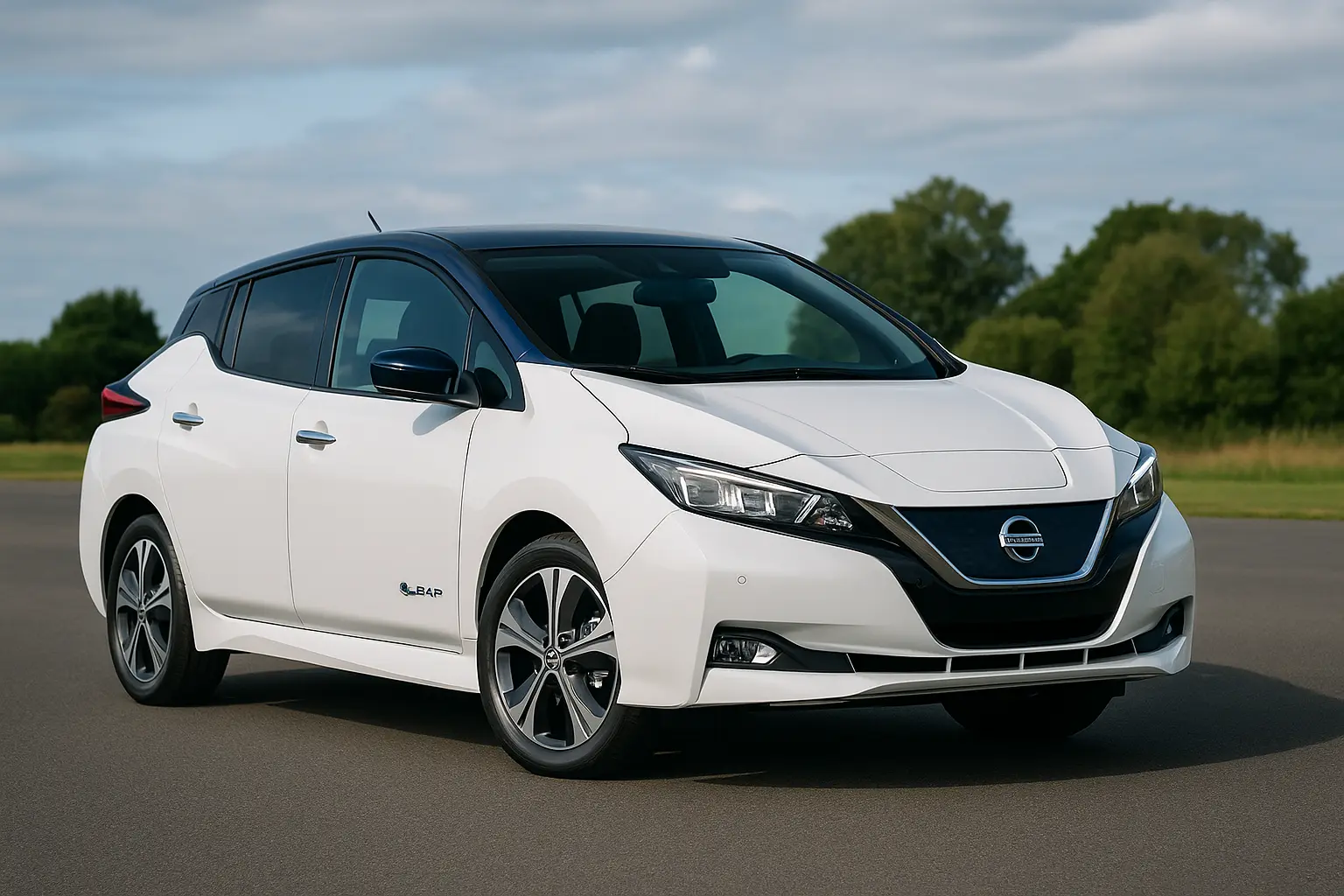
The Nissan Leaf carries the compact hatchback DNA Australians have long embraced through models like the Toyota Corolla and Mazda3. Unlike some EVs that exaggerate futuristic looks, Nissan has gone for familiarity with a twist of modernity.
The exterior adopts Nissan’s signature V-Motion grille, albeit closed off since EVs don’t need the same air intake. Sleek LED headlights with boomerang-shaped daytime running lights give it a sharp, forward-looking presence. Its short bonnet and smooth surfaces contribute to an aerodynamic profile, enhancing efficiency.
From the side, the Leaf looks unmistakably hatchback, with a slightly elevated stance compared to smaller hatches like the Suzuki Swift. Its 17-inch alloy wheels and black roof accents add visual appeal, while the rear showcases a bold spoiler and LED taillights that taper toward the centre.
The overall styling isn’t as radical as Hyundai’s Ioniq 5 or Tesla’s Model 3. Instead, it’s approachable—a key advantage for buyers transitioning to EVs who still want a car that blends in while standing out just enough.
Interior Comfort and Cabin Layout
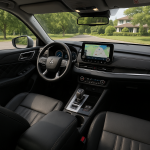
Step inside the Nissan Leaf, and you’re greeted by a cabin that balances practicality with a touch of innovation. Nissan hasn’t attempted to reinvent the wheel but has instead evolved its traditional interior design language for the EV age.
Soft-touch materials and textured plastics dominate the dashboard. The centrepiece is an 8-inch infotainment system compatible with Apple CarPlay and Android Auto, flanked by physical buttons for easy operation. Below this sits a neat climate control cluster with tactile dials—a refreshing move when compared to fully touchscreen-based systems that can distract while driving.
One of the standout features is the e-shifter, a small, futuristic-looking joystick replacing the conventional gear lever. It’s intuitive and easy to use. The digital instrument cluster combines an analogue speedometer with a 7-inch digital display that provides essential EV data like range, battery percentage, and energy regeneration statistics.
Passenger comfort is another highlight. The front seats are generously padded, offering good lumbar support, making long drives surprisingly pleasant. Rear seat space is adequate for adults, though taller passengers may feel the pinch due to the sloping roofline.
The Leaf’s boot space stands at 435 litres, which is commendable for an EV hatchback. It’s practical enough for groceries, a pram, or a couple of suitcases, though not as cavernous as some small SUVs.
Powertrain and Performance
The Nissan Leaf is offered in two variants in Australia: the standard Leaf and the Leaf e+.
- Standard Leaf: Equipped with a 40 kWh lithium-ion battery, producing 110 kW of power and 320 Nm of torque. Its claimed range is around 270 km (WLTP cycle), making it ideal for city commuting and short trips.
- Leaf e+: This variant ups the ante with a 62 kWh battery, delivering 160 kW and 340 Nm of torque, along with a significantly longer range of approximately 385 km.
Performance on the road is typical of EVs: immediate torque delivery translates to zippy acceleration. While it won’t outpace performance EVs like the Tesla Model 3 or Kia EV6, the Leaf feels agile around town, reaching 0-100 km/h in around 7.9 seconds for the e+.
The regenerative braking system, dubbed e-Pedal, is a highlight. It allows drivers to accelerate and decelerate using only the accelerator pedal, improving efficiency and reducing wear on the brakes.
Handling is composed, with light steering making urban manoeuvring easy. The low-mounted battery pack contributes to a planted feel on highways, though spirited drivers may find body roll more noticeable compared to sportier hatchbacks.
Charging and Range in Australia
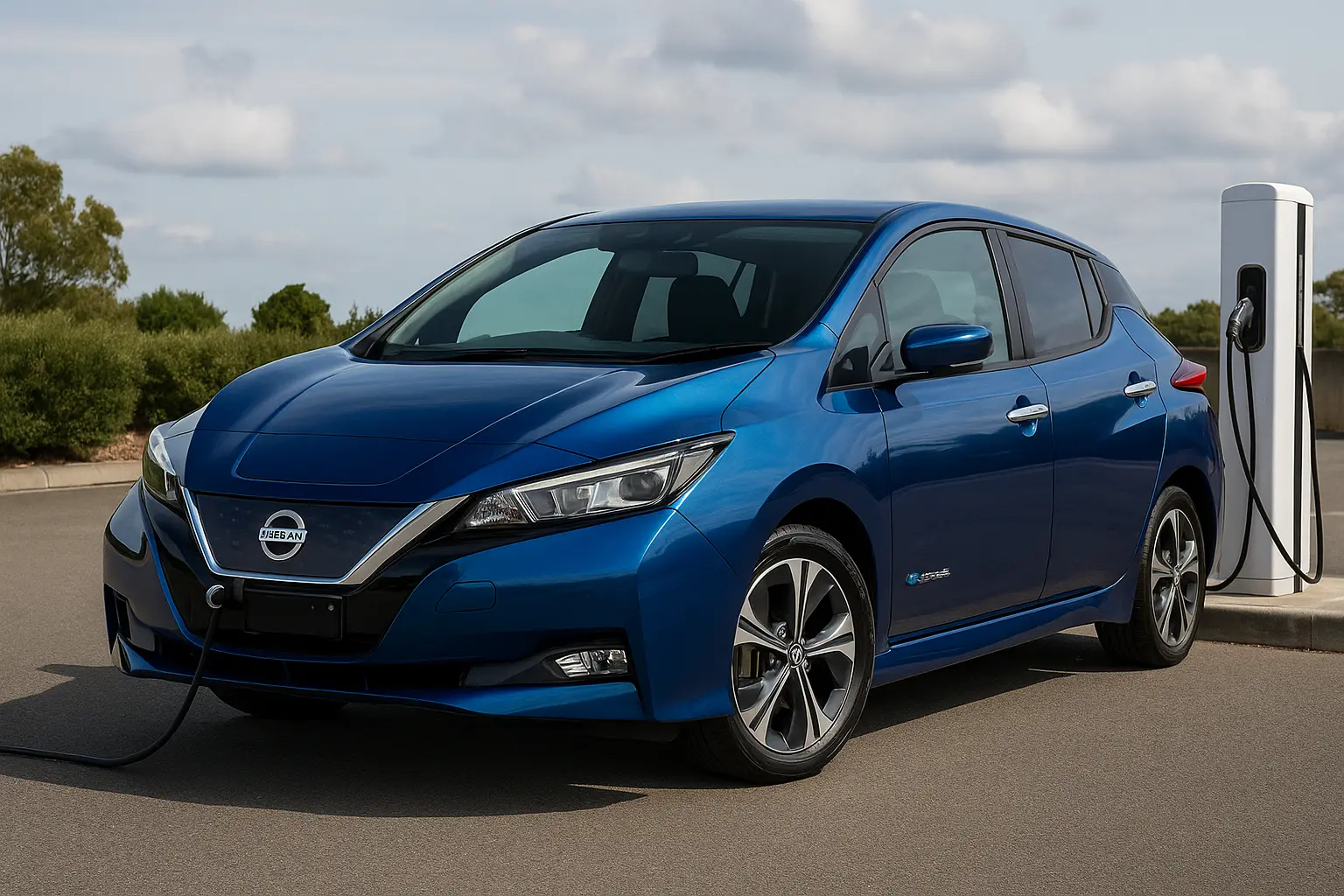
For many potential buyers, charging convenience is a make-or-break factor. The Nissan Leaf offers flexible charging options:
- AC Charging: Using a 7 kW wall box at home, the standard Leaf charges from empty to full in about 7.5 hours, while the Leaf e+ takes around 11.5 hours.
- DC Fast Charging: Via CHAdeMO connection, the standard Leaf can be charged to 80% in about 40 minutes, and the e+ in roughly 60 minutes.
Public charging infrastructure in Australia is expanding rapidly, with providers like Chargefox and Evie Networks rolling out more fast chargers across highways and cities. For urban residents, the Leaf’s range comfortably covers daily commutes and errands.
The Leaf’s range may not match long-distance champions like the Tesla Model 3 Long Range or Hyundai Ioniq 6, but for the average Aussie household driving 35–50 km a day, it’s more than sufficient.
Technology and Infotainment
Technology is one of the Leaf’s strongest selling points. Its NissanConnect infotainment system integrates seamlessly with smartphones, offering navigation, voice recognition, and even remote functions through an app. Owners can pre-cool or pre-heat the cabin, check charging status, or locate the car remotely.
The 8-inch display, while not the largest, is sharp and user-friendly. Coupled with a 7-speaker Bose audio system in higher trims, it provides a rich entertainment experience.
Driver assistance technologies are equally impressive. The Leaf includes Nissan’s ProPILOT Assist, which combines adaptive cruise control and lane-keeping to reduce fatigue during highway drives. It’s not fully autonomous but takes the sting out of long commutes.
Safety Ratings and Features
The Nissan Leaf carries a 5-star ANCAP safety rating (awarded in 2018). Safety has been baked into its design, with a suite of advanced driver-assistance systems (ADAS) offered as standard.
Key safety features include:
- Autonomous emergency braking with pedestrian detection
- Blind-spot monitoring
- Lane departure warning and lane-keeping assist
- Rear cross-traffic alert
- Intelligent around-view monitor (360-degree camera)
- 6 airbags and strong crash structure
For families and safety-conscious buyers, the Leaf ticks essential boxes. Its child-friendly features like ISOFIX mounts further boost its appeal to young families considering their first EV.
Price and Variants in Australia
As of 2025, the Nissan Leaf remains one of the most affordable EVs in Australia.
- Nissan Leaf (40 kWh): Around $50,000–$52,000 drive-away (depending on state and dealer).
- Nissan Leaf e+ (62 kWh): Approximately $61,000–$64,000 drive-away.
Government incentives and rebates can reduce the effective cost. For example, NSW, Victoria, and Queensland offer rebates of up to $3,000 for EVs priced under a certain threshold, and stamp duty exemptions further sweeten the deal.
Compared to rivals, the Leaf is cheaper than the Tesla Model 3 ($62k+), Hyundai Kona Electric (~$55k–$65k), and Kia Niro EV (~$66k+). This price positioning makes the Leaf a compelling choice for budget-minded EV adopters.
Ownership Costs and Running Expenses
One of the biggest appeals of owning a Nissan Leaf is the low running cost. Charging at home is significantly cheaper than filling up with petrol, especially if you have solar panels installed.
Servicing is also more affordable. With fewer moving parts than internal combustion cars, EVs like the Leaf don’t require oil changes, spark plugs, or complex transmission servicing. Nissan Australia offers capped-price servicing for peace of mind, with intervals every 12 months or 20,000 km.
Insurance premiums for EVs can be slightly higher, but the Leaf’s affordability compared to luxury EVs makes it relatively cheaper to insure. Resale values, while improving, remain an area to watch as Australia’s second-hand EV market is still maturing.
Driving Experience in Australian Conditions
The Leaf feels particularly suited to Australian urban environments. Its compact size makes it easy to navigate through city streets and shopping centre car parks, while instant torque ensures stress-free merging on highways.
On rural roads, the Leaf e+ shines with its longer range, allowing drivers to tackle regional trips with fewer charging stops. Noise insulation is impressive, with minimal wind or road noise, enhancing its reputation as a comfortable cruiser.
The Leaf isn’t designed to be a performance machine, but rather a sensible, practical EV. For buyers expecting a reliable daily commuter, it more than delivers.
Competitors in the Market
The Nissan Leaf competes with a growing list of EVs in Australia:
- Tesla Model 3: More range and technology, but higher price.
- Hyundai Kona Electric: Similar price, SUV body style, but smaller boot.
- MG4 EV: Cheaper entry point, newer in market, strong value.
- BYD Dolphin: Budget-friendly with impressive features, challenging Leaf’s dominance.
Despite stiff competition, the Leaf’s established history, strong reliability, and approachable design make it a safe and proven bet.
Pros and Cons of the Nissan Leaf
Pros:
- Affordable entry to EV ownership
- Practical hatchback design
- Strong safety features and 5-star rating
- Easy to drive with instant torque
- Established global reputation
Cons:
- Range is outclassed by newer rivals
- CHAdeMO charging port less common than CCS in Australia
- Rear legroom slightly tight
- Resale value uncertain compared to ICE cars
Is the Nissan Leaf Right for You?
The Nissan Leaf is best suited to urban and suburban drivers seeking a dependable, affordable entry point into the EV world. For households with access to home charging and daily drives within 50–100 km, it’s close to ideal.
If long-distance travel is a priority, buyers may need to look at the Leaf e+ or consider rivals with longer ranges. Yet, for many Australians who want a no-nonsense EV with proven reliability, the Leaf is hard to beat.
Final Verdict
The Nissan Leaf stands as one of the most important EVs in automotive history. While newer models from rival brands may overshadow it with longer ranges or bolder designs, the Leaf’s combination of affordability, practicality, and everyday usability ensures it remains relevant.
For Australian buyers wanting a sensible, safe, and budget-friendly electric hatchback, the Nissan Leaf remains an excellent choice in 2025

Leave a comment
Your email address will not be published. Required fields are marked *