The 2025 Honda HR-V represents Honda’s evolving philosophy of smart engineering, comfort, and urban practicality. As small SUVs dominate Australia’s roads, the HR-V steps in with hybrid efficiency, thoughtful ergonomics, and an elegant yet understated design.
This isn’t a flashy or oversized SUV trying to make a scene — it’s an intelligent compact crossover aimed at buyers who value refinement, efficiency, and ease of ownership over raw power or unnecessary gimmicks.
The latest HR-V showcases how Honda continues to improve its long-running formula while maintaining its reputation for reliability and precision. But is it enough to compete against the likes of the Toyota C-HR, Mazda CX-30, and Hyundai Kona? Let’s take a deep, realistic look.
Price and Variants in Australia
The HR-V range in Australia keeps things simple and transparent, following Honda’s “fixed price” model where every customer pays the same drive-away cost — no dealer haggling or hidden extras.
As of 2025, the lineup includes:
- Vi X (Petrol) – from around $34,900 drive-away
- e:HEV X (Hybrid) – around $39,900 drive-away
- e:HEV L (Hybrid Top Trim) – around $42,900 drive-away
That places the HR-V right in the middle of the compact SUV price bracket. While not the cheapest, the hybrid powertrain and Honda’s long-term reliability make it attractive to buyers looking for peace of mind and long-term ownership value.
The entry Vi X petrol variant is the practical choice for budget-minded buyers, while the e:HEV L caters to those who prefer the full suite of luxury and safety tech.
Exterior Design – Elegant, Mature, and Confident
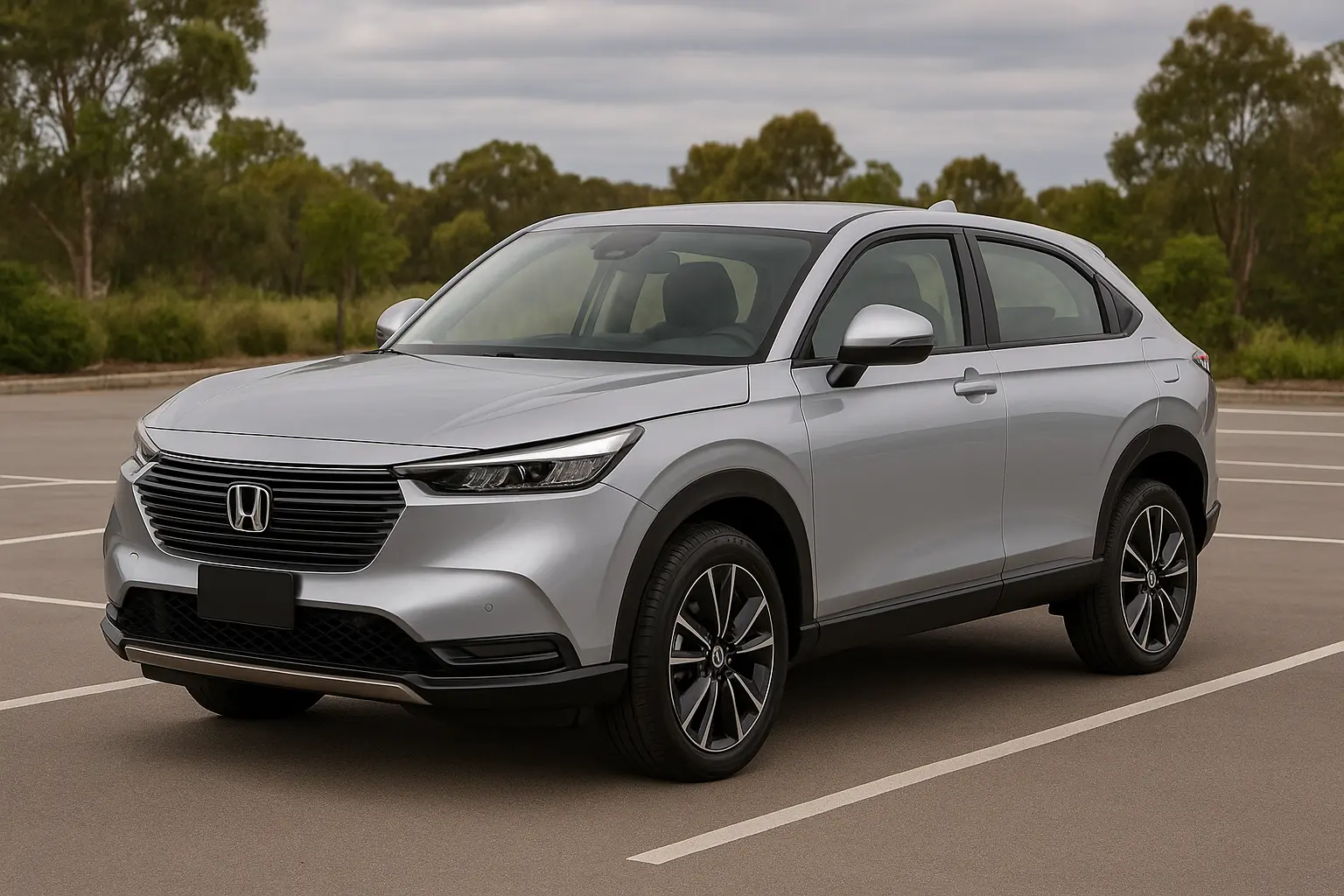
Honda’s designers have taken a clean, sophisticated approach with the 2025 HR-V. The front end now carries a stronger horizontal grille design framed by slim LED headlights, giving it a broad, confident stance without unnecessary aggression.
The side profile remains coupe-like, but the lines are smoother and better balanced than before. Subtle creases along the doors give it definition, while the rear end looks tidy with new taillight clusters and a light bar that spans the width — an elegant nod to modern SUV styling trends.
The overall aesthetic is cohesive and grown-up. It doesn’t scream for attention but holds its own with quiet confidence. It’s a car that looks premium without pretending to be something it’s not.
Top variants add attractive details such as 18-inch alloy wheels, adaptive LED headlights, and a power tailgate with hands-free operation — features that add convenience and refinement for daily life.
Interior & Cabin Experience – Minimalist but Practical
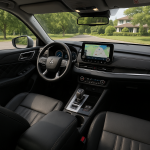
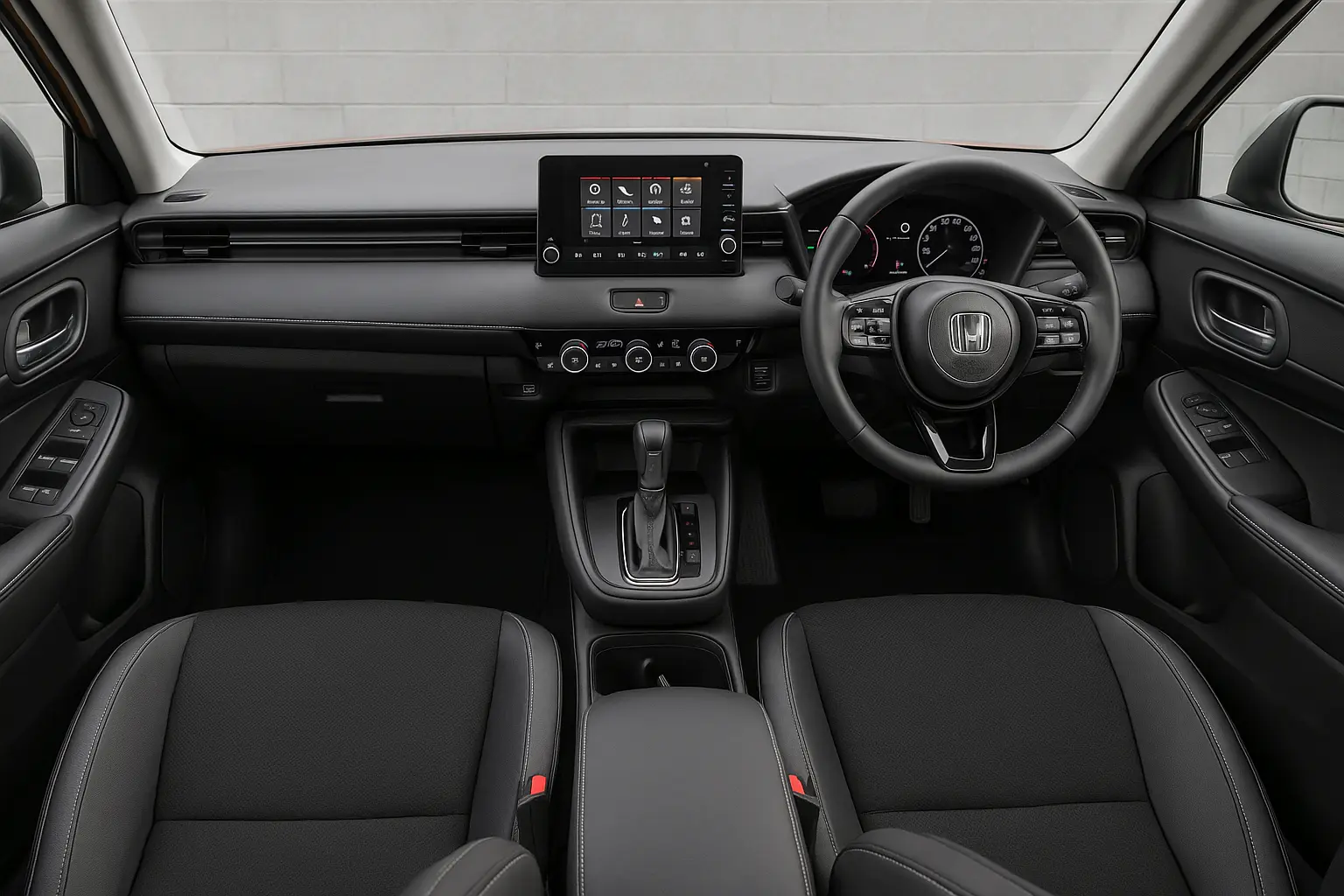
Step inside the HR-V and you’re greeted by one of the most thoughtfully laid-out cabins in the segment. Honda continues its tradition of clean dashboards, tactile buttons, and excellent visibility.
A 9-inch infotainment display sits proudly in the centre, angled slightly toward the driver. The interface is logical and responsive, with support for Apple CarPlay (wireless) and Android Auto (wired). Physical knobs for volume and climate control remain — something many drivers still appreciate.
Comfort and Space
The HR-V’s front seats are supportive with generous bolstering, making long trips comfortable. Dual-zone climate control, heated front seats, and high-quality materials on the dash and doors give the cabin a more premium feel than you’d expect in this class.
In the rear, legroom and headroom are decent, though the sloping roofline slightly affects space for taller passengers. It’s best for two adults in the back rather than three — which aligns with the HR-V’s official four-seat certification in Australia.
Yes, that’s right — the HR-V is technically a four-seater here. The reason? It lacks the top tether point required for a fifth child seat position. While there’s physically room for a middle passenger, regulations prevent Honda from marketing it as a five-seater.
For many urban buyers or couples, this isn’t a dealbreaker, but families should note the limitation.
Magic Seats – Honda’s Clever Trick
One of Honda’s standout innovations continues in the HR-V: the Magic Seat system. Because the fuel tank sits under the front seats, the rear seats can fold completely flat or flip upward, allowing tall or bulky items — even indoor plants or bicycles — to fit upright in the second row.
It’s a clever and genuinely useful feature that makes the HR-V feel far more versatile than its compact footprint suggests.
Technology and Infotainment
The infotainment system in the HR-V is intuitive and nicely integrated. The 9-inch touchscreen offers clear graphics, a fast processor, and minimal lag. Wireless Apple CarPlay works seamlessly, while Android Auto users will need a cable connection.
A 7-inch digital driver display provides key information such as battery status, energy flow (in hybrids), and trip data in crisp resolution. The interface feels modern but not distracting.
Higher trims include a six-speaker sound system, push-button start, auto-dimming mirror, ambient lighting, and additional USB-C ports.
Overall, it’s not a tech overload — Honda avoids unnecessary complexity and focuses on functional, driver-friendly design.
Engine, Hybrid System & Performance
Powertrain Options
Honda keeps things simple under the bonnet with two distinct setups:
- 1.5-Litre i-VTEC Petrol (Vi X variant)
- Power: ~89 kW
- Torque: ~145 Nm
- Transmission: CVT automatic
- Drivetrain: Front-wheel drive
- 1.5-Litre e:HEV Hybrid (X and L variants)
- Combined system power: ~96 kW
- Torque: ~253 Nm (with electric motor assist)
- Transmission: e-CVT
- Drivetrain: Front-wheel drive
The petrol version is adequate for city driving but feels modest on open highways or during overtaking. It’s smooth but not quick. The hybrid, meanwhile, feels more energetic thanks to the electric motors’ instant torque, providing better low-end response and overall refinement.
Driving Dynamics
On Australian roads, the HR-V feels balanced and composed. The suspension is tuned for comfort, soaking up bumps and rough edges gracefully. Steering is light but precise, making it easy to maneuver through city traffic or tight parking spaces.
At highway speeds, it remains impressively quiet, aided by sound-deadening materials and the hybrid system’s ability to cruise on electric power at lower speeds.
There’s little in the way of sporty excitement — this isn’t a performance SUV — but the HR-V’s smoothness, visibility, and well-judged ride make it relaxing to drive daily.
Fuel Efficiency
The hybrid’s standout feature is its fuel economy. In real-world mixed driving, expect around 4.3 – 4.6 L/100 km, making it one of the most efficient small SUVs in the market.
The petrol variant averages around 6.7 – 7.0 L/100 km, still respectable but not as compelling compared to the hybrid.
Safety Features & Ratings
Every HR-V sold in Australia comes standard with the Honda Sensing suite — a comprehensive package of driver-assistance technologies.
Standard systems include:
- Autonomous Emergency Braking (AEB)
- Lane Keep Assist
- Road Departure Mitigation
- Forward Collision Warning
- Adaptive Cruise Control
- Traffic Jam Assist
- Blind Spot Monitoring
- Rear Cross-Traffic Alert
- Driver Attention Monitor
The HR-V also includes a multi-angle reversing camera, parking sensors, and tyre pressure monitoring.
While it offers excellent real-world protection, the HR-V’s official ANCAP rating is 4 stars. This slightly trails top-scoring rivals but still reflects strong occupant protection and safety technology overall.
The slightly lower score stems mainly from its limited rear child-seat tether points and slightly lower pedestrian protection figures.
Interior Features & Comfort Highlights
Top-spec variants like the e:HEV L offer a near-luxury experience with:
- Dual-zone climate control
- Leather-accented upholstery
- Heated front seats
- Smart keyless entry
- Hands-free power tailgate
- Rain-sensing wipers
- LED fog lights
- Adaptive LED headlights
- Auto-dimming mirror
Practical touches such as large storage cubbies, cupholders, and a deep centre console make it easy to live with. Build quality feels solid, with minimal rattles and premium tactile finishes on frequently touched surfaces.
Space & Boot Capacity
The HR-V’s cabin space is well-designed for its size.
- Boot capacity: about 304 litres with seats up
- Expands to around 1,274 litres when the rear seats fold flat
Thanks to the Magic Seat system, the HR-V offers different load configurations:
- Utility Mode: Flat load floor for large items
- Tall Mode: Fold seat bases up for tall cargo
- Long Mode: Fold down front and rear seats to fit long objects
It’s a clever solution that most competitors can’t match.
Ownership, Warranty & Servicing
Honda Australia backs the HR-V with one of the most transparent ownership programs in the country.
- Warranty: 5 years / unlimited km
- Hybrid battery warranty: 8 years
- Capped-price servicing: approx. $199 per visit
- Service interval: every 12 months or 10,000 km
- Roadside assistance: included for the warranty term
These fixed-price servicing plans make budgeting predictable. Honda’s reliability record further supports long-term ownership confidence.
Fuel and maintenance costs are notably low for the hybrid version, giving it an edge for urban commuters or drivers clocking high mileage.
Driving Impressions – On the Road
The HR-V delivers a mature, relaxed driving experience rather than chasing thrills.
Around town, it glides quietly on electric power at low speeds before the petrol engine joins smoothly. The transition between EV and petrol power is almost imperceptible.
Visibility is excellent, and the high seating position gives confidence without feeling bulky. The steering is light in parking lots but gains just enough weight at highway pace.
The suspension tuning finds a good balance between comfort and composure. Even over coarse Australian bitumen or speed humps, it remains supple and settled.
While the CVT can cause the engine to sound strained under hard acceleration, most owners will find the overall refinement impressive.
Noise insulation has improved over earlier generations, with less road roar and better wind sealing.
Fuel Economy & Real-World Ownership
The hybrid HR-V is one of the most fuel-efficient vehicles in its segment. Even in city traffic, the system spends a surprising amount of time in electric-only mode, meaning stop-start driving is smooth and quiet.
Owners can expect around 1,000 km per tank in real-world use, depending on conditions. The compact battery doesn’t eat into boot space either — a thoughtful touch by Honda’s engineers.
The petrol model, while less frugal, still benefits from Honda’s renowned reliability and low maintenance needs. It’s simple, proven, and easy to service anywhere in Australia.
Competitors & Market Position
The HR-V competes in one of the toughest categories on the Australian market. Its closest rivals include:
- Toyota C-HR Hybrid – sportier look, similar efficiency
- Mazda CX-30 – stylish, premium interior, more powerful engines
- Hyundai Kona Hybrid – tech-heavy, value-packed
- Kia Seltos – practical, family-friendly
- Nissan Qashqai – larger, more features at higher trims
Where the HR-V wins is in everyday refinement, build quality, and Honda’s solid resale reputation. It may not boast the most gadgets, but it feels durable and thoughtfully engineered.
Strengths
- Exceptional hybrid fuel efficiency
- Smooth, quiet and refined drive
- Clever Magic Seat practicality
- Transparent pricing and low servicing costs
- High-quality interior fit and finish
- Long hybrid battery warranty
Weaknesses
- Only certified for four occupants in Australia
- Lacks wireless charging and rear air vents in some trims
- Not as powerful as sportier rivals
- 4-star ANCAP safety rating (not class-leading)
- Higher initial price compared with base petrol SUVs
Verdict – Is the Honda HR-V Worth It?
If you’re shopping for a compact SUV that prioritises comfort, quality, and low running costs over outright performance, the 2025 Honda HR-V is one of the most sensible choices available in Australia.
It’s not designed to thrill or dominate spec sheets — instead, it focuses on delivering what most people actually want: effortless urban driving, bulletproof reliability, clever practicality, and long-term peace of mind.
The hybrid’s efficiency makes it an ideal daily driver, while Honda’s transparent ownership costs make budgeting easy. The HR-V’s subtle design and ergonomic cabin also stand out in a market full of over-styled alternatives.
For small families, retirees, or city dwellers seeking a dependable compact SUV with genuine everyday usability, the Honda HR-V strikes the right balance between refinement and simplicity.
Final Thoughts
Honda continues to play to its strengths — thoughtful design, smooth engineering, and reliability that doesn’t rely on hype. The 2025 HR-V may not be the flashiest or most powerful SUV in its class, but it nails what matters most to the majority of Australian drivers.
With its hybrid system, solid warranty, and smart cabin layout, the HR-V remains one of the most well-rounded compact SUVs on sale in Australia today.

Leave a comment
Your email address will not be published. Required fields are marked *