The Ford Everest has carved a strong reputation in Australia’s competitive SUV market. Built on the same platform as the Ford Ranger ute, the Everest blends family practicality with serious off-road credentials. Unlike many crossovers that are more suited for the city, the Everest’s ladder-frame construction and 4x4 systems make it a genuine off-road SUV.
For Aussie families, it represents a multi-purpose choice: a seven-seat SUV with towing capacity for caravans, space for camping trips, and modern safety tech for daily commutes. But with rivals like the Toyota Prado, Isuzu MU-X, and Mitsubishi Pajero Sport, does the Ford Everest still stand out? Let’s dive deep into every aspect of the Everest to find out.
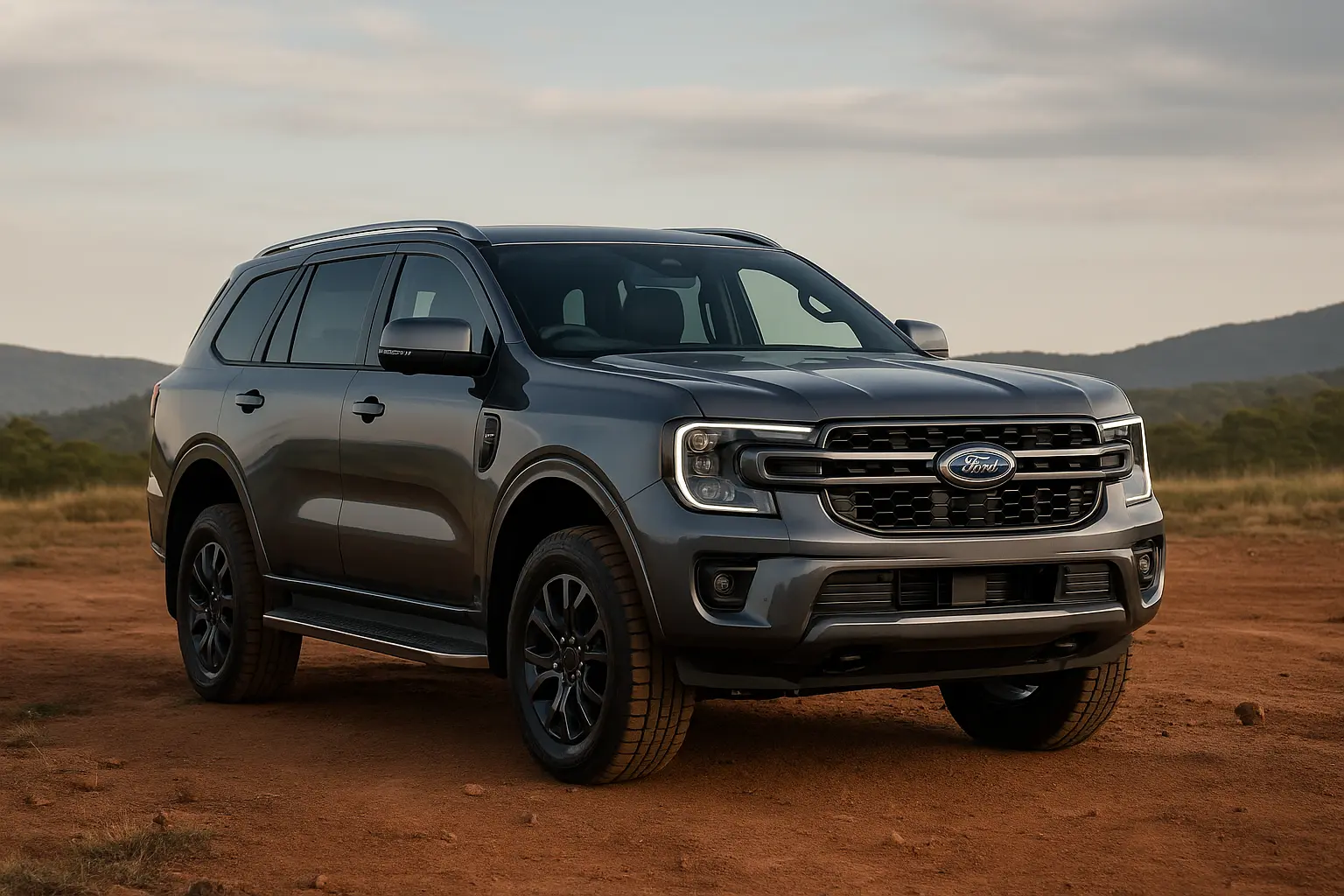
Exterior Design and Road Presence
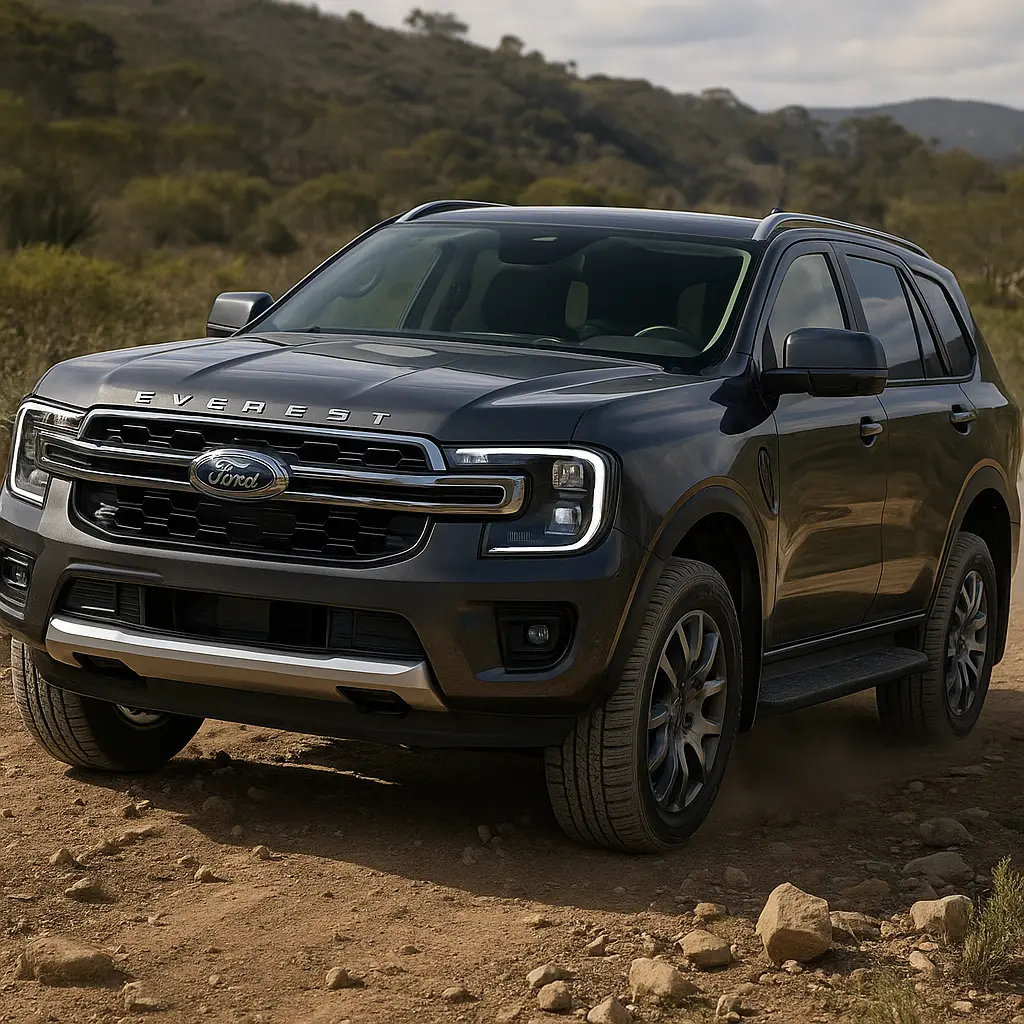
The Everest makes an immediate impression on the road. Its design is bold, muscular, and unmistakably Ford. The upright front grille with C-clamp LED headlights gives it a modern face that ties closely with the latest Ranger. From the side, its high ground clearance and squared wheel arches emphasize its off-road-ready stance.
- Front Styling: The new-generation Everest features a more aggressive grille and sleek LED lighting. Depending on the variant, you get matrix LED headlights and stylish daytime running lights.
- Rear Profile: A clean tailgate design with horizontal tail lamps and a wide stance.
- Wheels: Alloy wheels range from 17 to 21 inches depending on trim, with off-road-focused tyres available on models like the Wildtrak and Sport.
- Colours: Australians can choose from earthy tones like Sedona Orange, Shadow Black, and Aluminium Metallic, making it stand out on rugged terrain.
Interior Comfort and Technology
Step inside the Everest and you’ll quickly realise Ford has stepped up its game in terms of cabin quality and tech.
- Seating and Space: Seven seats are standard in most variants, with ample headroom and legroom even in the second row. The third row is usable for adults on shorter trips, though best for kids on long journeys.
- Dashboard Layout: A clean, modern design with large portrait-oriented infotainment screens up to 12 inches in higher trims.
- Technology:
- Ford’s SYNC 4A system with wireless Apple CarPlay and Android Auto.
- Digital instrument cluster.
- Wireless phone charging.
- Multiple USB-A and USB-C charging ports.
- Comfort Features: Leather seats in upper trims, heated and ventilated front seats, dual-zone or tri-zone climate control.
It’s not just about luxury — Ford has made the cabin durable enough for family and off-road life, with clever storage compartments and easy-clean surfaces.
Performance and Engine Options
The Everest has been engineered to balance daily usability with long-distance touring and off-road muscle.
- Engine Choices in Australia:
- 2.0-litre Bi-Turbo Diesel (154kW/500Nm): Found in lower trims, suitable for city use and light touring.
- 3.0-litre V6 Turbo Diesel (184kW/600Nm): Available in higher trims like Platinum, this powerhouse gives the Everest strong towing and off-road ability.
- Transmission: 10-speed automatic across the range for smooth, fuel-efficient driving.
- Drivetrain Options: 4x2 (rear-wheel drive) and 4x4 with selectable drive modes.
On-road Performance: Despite its size, the Everest feels composed on highways. The suspension tuning offers a good compromise between comfort and firmness. The V6 diesel provides effortless overtaking power and stability when towing.
Off-road Ability: The Everest shines here with:
- 4x4 with low-range gearing.
- Locking rear differential.
- Terrain Management System (Sand, Mud, Rock, Normal).
- Water wading depth of up to 800mm.
- Ground clearance of 226mm.
For Aussie adventurers, this means the Everest can handle the Simpson Desert, the Kimberley, or a family weekend at Fraser Island with confidence.
Towing and Payload
The Ford Everest is a favourite for towing, thanks to its heavy-duty build and powerful engines.
- Towing Capacity: Up to 3,500kg braked towing, matching rivals like the Toyota Prado and Isuzu MU-X.
- Payload Capacity: Varies between 650kg–750kg depending on variant.
- Tow Features: Integrated trailer brake controller, trailer sway control, and camera systems for easier hitching.
For Aussie families with caravans, horse floats, or boats, the Everest is one of the top contenders in its class.
Safety and ANCAP Rating
Safety is a strong point of the Ford Everest, making it family-friendly and reassuring for long trips.
- ANCAP Rating: 5 stars.
- Standard Safety Features:
- Autonomous Emergency Braking (AEB).
- Lane Keeping Assist and Lane Departure Warning.
- Adaptive Cruise Control with Stop & Go.
- Blind Spot Monitoring.
- Rear Cross-Traffic Alert.
- Seven airbags including side curtain airbags.
Higher trims include features like a 360-degree camera, evasive steering assist, and advanced driver monitoring systems.
Variants and Pricing in Australia
Ford offers multiple trims, catering to different budgets and needs.
- Ambiente: Entry-level, practical, affordable.
- Trend: Popular choice with added features.
- Sport: Stylish touches and improved features.
- Wildtrak: Rugged, adventurous styling.
- Platinum: Luxury-oriented flagship with V6 diesel.
Price Range in Australia (approx.):
- Ambiente 4x2: from $53,000 drive-away.
- Trend 4x4: from $63,000.
- Sport 4x4: from $69,000.
- Wildtrak: from $73,000.
- Platinum V6 4x4: from $85,000+.
Prices vary based on dealer offers, region, and options.
Fuel Efficiency
Despite being a large SUV, Ford has worked on fuel efficiency.
- 2.0 Bi-Turbo Diesel: Around 7.1L/100km combined.
- 3.0 V6 Diesel: Around 8.5–9.2L/100km combined.
For long road trips and towing, the Everest’s efficiency is competitive in its class.
Everest vs. Rivals
How does the Everest compare against its main rivals?
- Toyota Prado: Renowned reliability, but Everest offers more modern tech and power.
- Isuzu MU-X: Great value and strong engine, but Everest has a more premium interior.
- Mitsubishi Pajero Sport: Affordable but lacks the Everest’s refinement.
- Toyota Fortuner: Strong off-road ability, but Everest feels larger and more comfortable.
Overall, the Everest strikes the balance between ruggedness and comfort better than most.
Maintenance and Ownership Costs
Ford offers capped-price servicing in Australia, helping owners manage costs.
- Service Intervals: 15,000km or 12 months.
- Warranty: 5 years/unlimited kilometres.
- Insurance: Premiums vary but align with similar large SUVs.
Given its strong resale value and growing popularity, the Everest is a safe bet for long-term ownership.
Who Should Buy the Ford Everest?
The Everest is ideal for:
- Families needing a versatile 7-seater.
- Off-road enthusiasts exploring Australia’s outback.
- Caravan and trailer owners who need reliable towing power.
- Buyers seeking a mix of ruggedness and modern tech in one package.
Conclusion: Is the Everest Worth It?
The Ford Everest is more than just another SUV. It’s a tough, well-rounded package that balances modern comforts with true off-road capability. In Australia, where families want a car that can handle school runs as well as Cape York adventures, the Everest ticks the boxes.
It’s not the cheapest SUV in its category, but the combination of design, features, towing ability, and rugged reliability makes it a smart investment for those who need more than just a city-focused crossover.
If you’re considering a large SUV for both family life and outdoor adventures, the Ford Everest deserves a top spot on your shortlist.

Leave a comment
Your email address will not be published. Required fields are marked *