When it comes to road safety and car performance, few factors are as underrated yet as essential as tyre pressure. Whether you’re driving through the bustling streets of Sydney, the winding roads of Tasmania, or the rugged outback tracks of Western Australia, maintaining the right tyre pressure can make all the difference. It impacts everything — from handling and braking distance to fuel economy and tyre longevity.
In Australia, where road conditions vary dramatically between city highways and rural gravel tracks, understanding tyre pressure isn’t just technical know-how — it’s a crucial part of everyday driving safety. This comprehensive guide will break down why tyre pressure matters, the risks of underinflation and overinflation, the best practices for monitoring and maintaining it, and safety tips tailored for Australian drivers.
Why Tyre Pressure Matters
Tyres are the only contact point between your car and the road. Their performance depends heavily on maintaining the right air pressure, measured in pounds per square inch (PSI) or kilopascals (kPa).
- Safety: Correct tyre pressure ensures the maximum contact patch with the road, improving grip, handling, and braking performance.
- Fuel Efficiency: Underinflated tyres increase rolling resistance, forcing your engine to work harder and consume more fuel.
- Tyre Longevity: Proper inflation reduces uneven tread wear, saving you money in the long run.
- Comfort: Balanced tyre pressure provides smoother rides, absorbing road imperfections effectively.
Think of tyre pressure as the “blood pressure” of your vehicle. Just as low or high blood pressure can affect your health, incorrect tyre inflation impacts your car’s performance and safety.
Understanding the Basics of Tyre Pressure
Before diving into the practices, it’s important to understand a few basics.
Recommended Tyre Pressure
- Every car has a manufacturer’s recommended tyre pressure, often found on a sticker inside the driver’s door jamb, fuel flap, or owner’s manual.
- These values vary depending on the car model, load conditions (light vs. heavy), and tyre type.
Tyre Pressure Units
- PSI (pounds per square inch): Most common in Australia.
- kPa (kilopascals): 1 PSI = ~6.9 kPa. Some cars display pressure in kPa.
Cold vs. Hot Tyres
- Always check tyre pressure when the tyres are cold (before driving or at least after 3 hours of rest). Driving heats tyres, increasing pressure temporarily, which can lead to inaccurate readings.
Risks of Incorrect Tyre Pressure
Underinflation
- Reduced safety: Increases stopping distance, especially on wet roads.
- Fuel penalty: Can reduce fuel economy by up to 5%.
- Tyre damage: Causes excessive wear on edges of the tread.
- Heat buildup: Increases the risk of blowouts on long drives, especially in hot Australian summers.
Overinflation
- Reduced grip: Smaller contact patch with the road.
- Uneven wear: Tyres wear faster in the centre of the tread.
- Ride discomfort: Car feels bumpier and less stable.
- Greater risk of punctures: Tyres become more vulnerable to sharp objects on rough roads.
How Often Should You Check Tyre Pressure?
- Every 2 weeks: Ideal for city drivers covering regular distances.
- Before long trips: Essential for highway or interstate journeys.
- When carrying heavy loads or towing: Adjust to higher recommended pressure for load conditions.
- Seasonal checks: Changes in temperature (especially in colder southern states vs. hot northern states) can alter tyre pressure.
Best Practices for Maintaining Correct Tyre Pressure
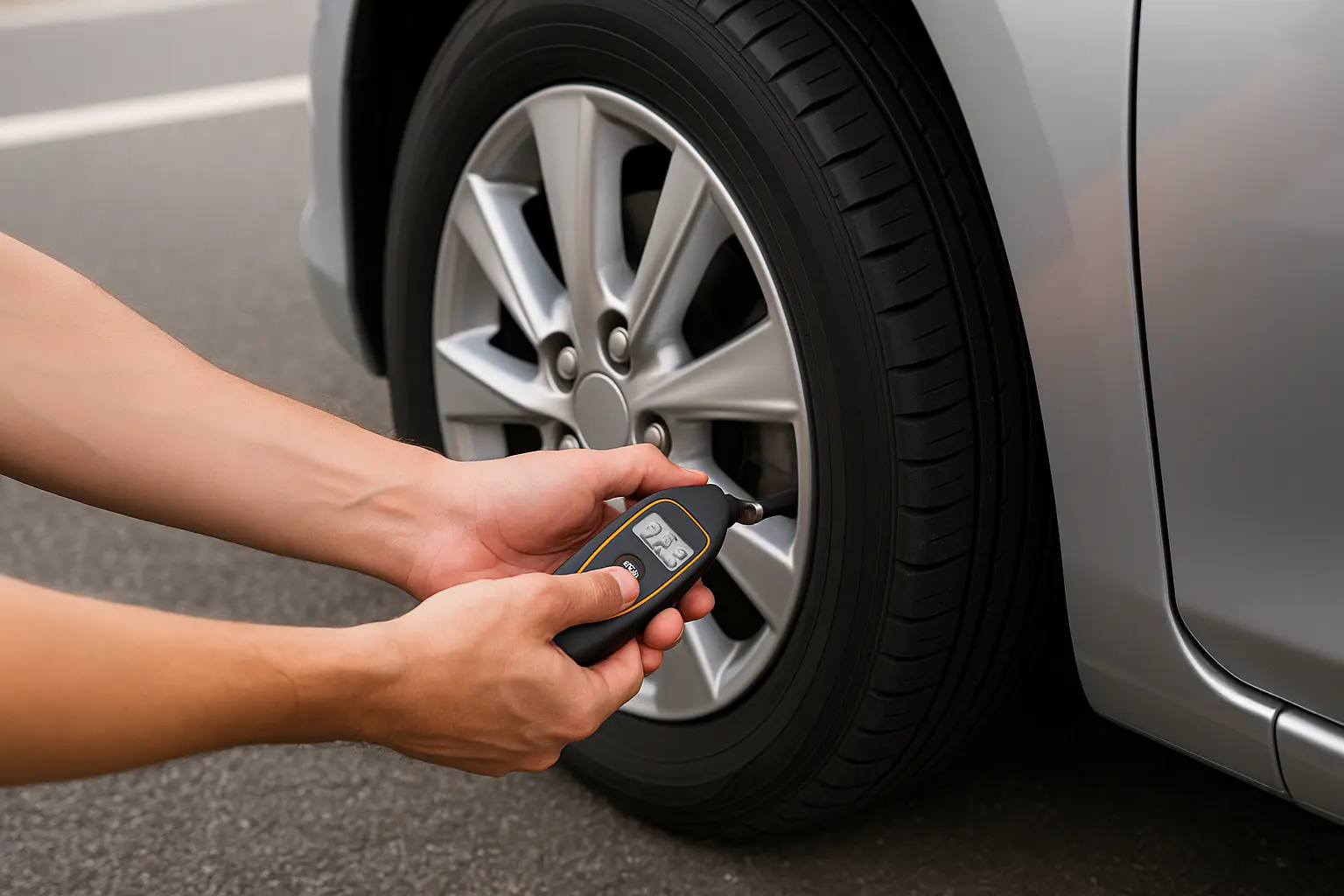
Invest in a Tyre Pressure Gauge
Portable digital or analog gauges are inexpensive and more reliable than some petrol station gauges.
Use Quality Air Compressors
Most service stations in Australia provide free air compressors, but having a portable inflator in your boot can be a lifesaver on long road trips.
Stick to Manufacturer Recommendations
Always follow the recommended PSI/kPa for your car, adjusting slightly when carrying full loads or towing.
Check the Spare Tyre Too
Many drivers forget this crucial step. A flat spare tyre won’t help in emergencies.
Monitor Tyre Pressure Monitoring Systems (TPMS)
- Many modern cars sold in Australia now include TPMS, which alerts drivers if a tyre is underinflated.
- However, TPMS often detects significant drops only, so manual checks remain important.
Tyre Pressure and Fuel Efficiency in Australia
With fuel prices fluctuating across Australia, tyre pressure has a direct impact on your wallet. Underinflated tyres can increase fuel consumption significantly, especially in stop-start traffic conditions common in Sydney and Melbourne. Even a small deviation of 5 PSI below the recommended level can cost hundreds of dollars annually in extra fuel.
Tyre Pressure for Different Driving Conditions
City Driving
- Stick to manufacturer recommendations.
- Regular checks are key due to frequent stop-start traffic.
Highway Driving
- Tyres heat up quickly at high speeds, so ensure they’re properly inflated to avoid overheating.
Rural & Off-Road Driving
- For gravel or sand, slightly lowering tyre pressure can improve grip and stability.
- Always reinflate once you return to sealed roads to avoid tyre damage.
Towing & Heavy Loads
- Increase tyre pressure as recommended for load conditions.
- This prevents excessive sidewall flexing, which can overheat tyres.
Seasonal Tyre Pressure Considerations in Australia
- Summer: Heat causes air to expand, increasing pressure. Check frequently to avoid overinflation.
- Winter (southern states): Cold weather contracts air, leading to underinflation risks.
- Tropical climates (Queensland, NT): Heat and humidity require more frequent checks due to higher risk of blowouts.
Common Myths About Tyre Pressure
- “Higher pressure gives better fuel economy.” Not entirely true. Excessive inflation reduces grip and safety.
- “You don’t need to check tyres if you have TPMS.” Wrong. TPMS doesn’t always catch gradual leaks or slight underinflation.
- “One size fits all.” Each car model has its own pressure recommendation — don’t assume.
Tyre Pressure Safety Tips for Australian Drivers
- Always check pressure when tyres are cold.
- Carry a portable compressor if driving long distances in remote areas.
- Inspect tyres visually for cracks, bulges, or uneven wear while checking pressure.
- Remember to check tyre age — even if tread looks fine, rubber deteriorates after 6–7 years.
- If unsure, get a professional tyre inspection at least once a year.
Tyre Pressure and Road Safety Statistics in Australia
According to studies, a large percentage of accidents linked to tyre blowouts in Australia stem from underinflated tyres. Tyres operating 20% below recommended pressure are considered dangerous and unsafe by most safety authorities. This shows why regular checks aren’t optional — they’re lifesaving.
How Tyre Pressure Affects Car Insurance
While tyre maintenance itself doesn’t directly lower your premium, unsafe tyres can affect accident liability. In some cases, insurers may deny claims if it’s proven that poorly maintained tyres contributed to an accident. Keeping tyres properly inflated not only protects your car but also safeguards your insurance coverage.
Maintenance Checklist
- Check tyre pressure every 2 weeks.
- Follow manufacturer’s PSI/kPa guidelines.
- Adjust for load, towing, or road conditions.
- Keep a portable gauge and compressor handy.
- Don’t forget the spare.
- Schedule annual professional checks.
Conclusion
Tyre pressure might seem like a small detail in the bigger picture of car maintenance, but it plays a critical role in safety, fuel efficiency, tyre life, and driving comfort. For Australian drivers — whether you’re navigating city traffic, long country highways, or rugged outback trails — staying on top of tyre pressure is a must.
By understanding the risks of underinflation and overinflation, following best practices, and adopting regular checks, you can ensure safer journeys, save money, and keep your car performing at its best.
Your tyres are your car’s foundation — take care of them, and they’ll take care of you on every trip.

Leave a comment
Your email address will not be published. Required fields are marked *