When most people think about cars, they picture engines, horsepower, or sleek designs. Yet one of the most critical aspects of driving often gets overlooked: the suspension system. Suspension is the unsung hero of ride comfort, handling, and safety.
In Australia, where roads range from smooth highways to rugged outback tracks, having the right suspension setup is vital. Whether you’re driving a compact city hatch, a family SUV, or a heavy-duty 4x4 ute, your suspension defines how connected you feel to the road.
This guide explains suspension systems in detail — the types, their advantages, their role in ride quality, and essential maintenance tips to keep your car performing at its best.
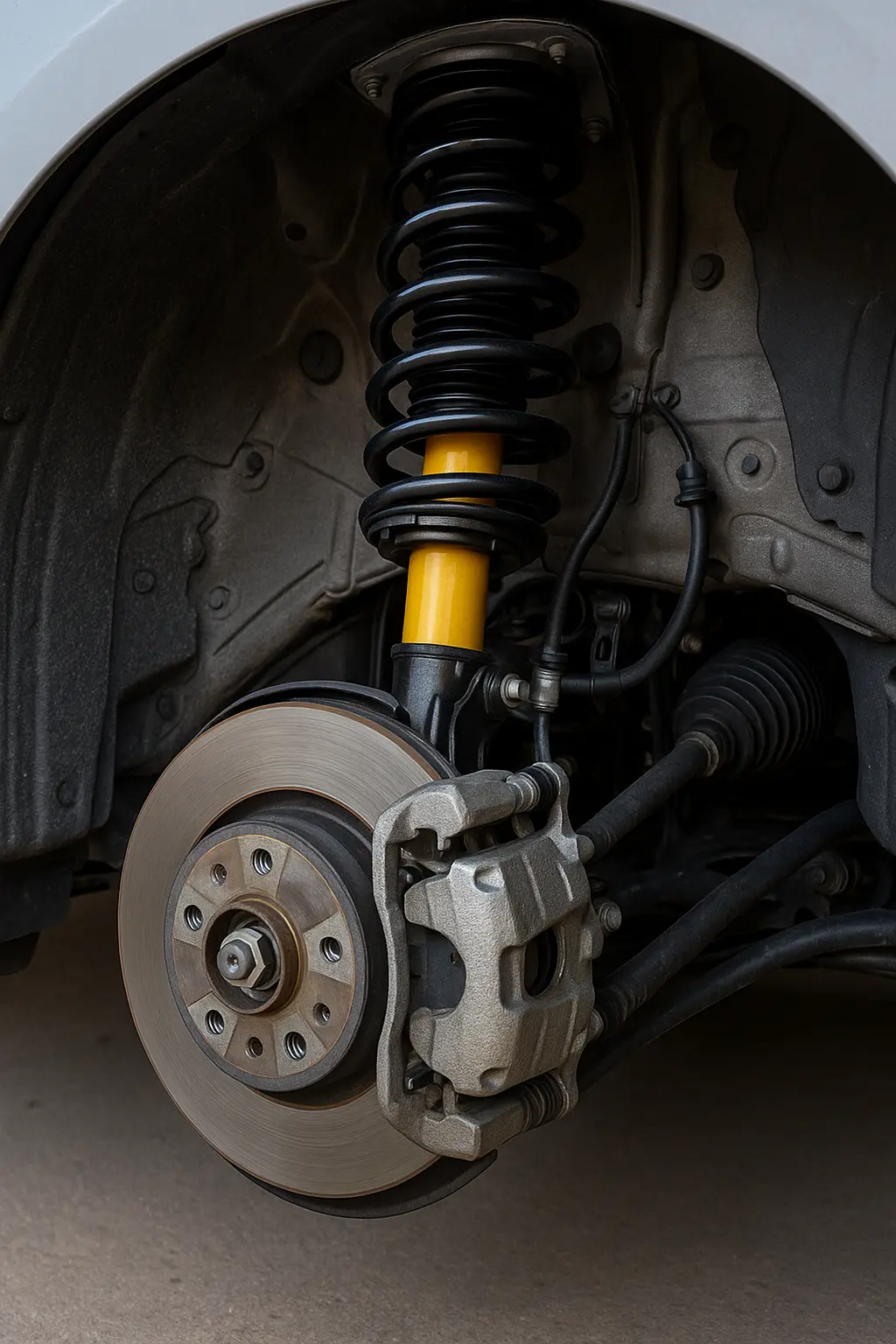
The Role of Car Suspension
Car suspension has three primary jobs:
- Comfort – absorbs bumps, potholes, and rough surfaces.
- Control – keeps tyres firmly in contact with the road.
- Stability – balances the car during braking, cornering, and acceleration.
Suspension is essentially a system of springs, dampers, arms, and bushings that work together to manage the forces acting on your vehicle. Without it, even the best cars would feel unstable and unsafe.
Suspension Basics: Key Components
To understand how suspension works, it helps to know the main parts:
- Springs: Coil, leaf, or torsion bars that absorb shocks.
- Shock absorbers (dampers): Control spring movement, preventing bounce.
- Struts: Combine spring and damper in one unit (common in front suspension).
- Control arms: Connect wheels to the chassis while allowing movement.
- Bushings: Rubber or polyurethane mounts that reduce vibration.
- Anti-roll bars: Reduce body roll during cornering.
Each component plays a role in keeping your car stable while ensuring comfort.
Types of Suspension Systems
MacPherson Strut Suspension
- Most common in small cars and sedans.
- Combines shock absorber and coil spring into one compact unit.
- Advantages: Lightweight, cost-effective, easy to repair.
- Best for: Everyday cars like Toyota Corolla or Hyundai i30.
Double Wishbone Suspension
- Uses two wishbone-shaped arms per wheel.
- Advantages: Superior handling, stability, and ride comfort.
- Best for: Sports cars and premium vehicles (e.g., Honda Accord, Lexus models).
Multi-Link Suspension
- Complex design with multiple arms for precision.
- Advantages: Excellent balance between comfort and performance.
- Best for: Luxury sedans and performance cars.
Leaf Spring Suspension
- Traditional system using stacked steel plates.
- Advantages: High load capacity, durability.
- Best for: Utes and trucks like Toyota Hilux and Ford Ranger.
Torsion Bar Suspension
- Uses a twisting metal bar as the spring.
- Advantages: Adjustable ride height, compact design.
- Best for: Off-road vehicles and older SUVs.
Air Suspension
- Uses airbags instead of metal springs.
- Advantages: Adjustable ride height, smooth comfort.
- Best for: Luxury cars (Mercedes S-Class, Range Rover).
Adaptive & Electronic Suspension
- Sensors adjust damping in real-time.
- Advantages: Tailors comfort and performance instantly.
- Best for: High-end performance and EVs.
Ride Comfort: What Affects It?
Ride comfort depends on more than just the suspension type. Key factors include:
- Tyres – Wider tyres grip better but can reduce comfort.
- Vehicle weight – Heavier vehicles often absorb bumps better.
- Suspension tuning – Sport-tuned suspensions favour handling over comfort.
- Road conditions – Australia’s rough regional roads highlight the importance of durable suspension.
For city driving, MacPherson struts and multi-link setups often provide the best comfort. For outback adventures, leaf springs or off-road suspension are more practical.
Suspension in Different Car Segments
Hatchbacks
Affordable hatchbacks usually use MacPherson struts up front and torsion beams at the rear. This keeps costs low while maintaining decent comfort.
Sedans
Mid-size sedans often upgrade to multi-link rears for better balance between comfort and handling.
SUVs
SUVs focus on versatile suspensions that balance load-carrying ability with family comfort. Many modern SUVs use independent suspension for improved ride quality.
Utes & 4x4s
Designed for heavy loads and rough tracks, utes still rely on leaf springs. However, premium 4x4s now offer coil or air suspension for improved comfort.
Car Suspension and Safety
A well-maintained suspension isn’t just about comfort — it’s about safety. Worn shocks or broken springs can lead to:
- Longer braking distances.
- Increased body roll, reducing stability.
- Poor traction, especially in wet conditions.
Australian crash testing (ANCAP) also factors in vehicle dynamics, which are directly influenced by suspension quality.
Suspension Maintenance Tips
Regular Inspections
Check your suspension every 20,000 km or annually. Look for leaking shocks, worn bushings, and uneven tyre wear.
Wheel Alignments
Poor alignment can damage suspension and tyres. Realign wheels every 10,000–15,000 km.
Tyre Checks
Tyres are part of the suspension system. Replace worn tyres promptly.
Warning Signs
- Car leans to one side.
- Excessive bouncing after bumps.
- Steering feels loose.
- Knocking noises on rough roads.
Replacement Costs
In Australia, replacing shocks can cost between $600 and $1,500 depending on the car. Air suspension repairs are more expensive, sometimes exceeding $5,000.
Upgrading Your Suspension
Some drivers choose to upgrade their suspension for:
- Better off-road capability – with lifted suspension kits.
- Improved performance – with stiffer springs and shocks.
- Enhanced comfort – with adaptive or air suspension retrofits.
However, modifications must comply with Australian Design Rules (ADR) and local road regulations.
Suspension in Electric Vehicles (EVs)
EVs are heavier due to battery packs, so suspension tuning is critical. Many EVs, such as Tesla and Hyundai Ioniq 5, use multi-link or adaptive systems to balance weight and comfort.
Expect to see more electronically controlled suspensions as EV adoption grows in Australia.
Future of Suspension Technology
Looking ahead, suspension technology is becoming smarter:
- Predictive suspension: Cameras scan the road and adjust in real-time.
- Magnetic ride control: Uses magnetorheological fluid to instantly change damping.
- Active suspension: Actuators actively push or pull wheels for ultimate comfort.
These systems will likely trickle down from luxury vehicles to mainstream models in the coming decade.
Conclusion: Why You Should Care About Suspension
Suspension isn’t just mechanical jargon — it’s what connects you to the road. Understanding suspension types helps you choose the right car for your needs, whether you’re after comfort, performance, or durability.
And with proper maintenance, you can extend the life of your suspension system, improve safety, and keep your drives smooth across Australia’s diverse roads.
When you next test drive a car, pay attention to how it handles bumps and corners — because that’s your suspension at work.

Leave a comment
Your email address will not be published. Required fields are marked *