Upgrading your car’s audio system can completely transform your driving experience. Whether you’re cruising along the Great Ocean Road, stuck in Sydney traffic, or heading out on a weekend trip, crisp vocals and deep bass can make every journey more enjoyable.
But when it comes to car audio upgrades, many Australian drivers wonder where to start — what parts to upgrade, how much to spend, and whether to go DIY or professional. This comprehensive guide walks you through everything you need to know to get the best sound from your car stereo, whether you’re chasing premium quality or a solid upgrade on a budget.
Why Upgrade Your Car Audio System?
Most factory-fitted car stereos are designed for cost efficiency rather than premium sound. Even in higher trims, the “stock” system often lacks the dynamic range, bass depth, and clarity that music lovers crave.
Upgrading can bring multiple benefits:
- Superior Sound Quality: Crisp highs, detailed mids, and deep bass tones.
- Customisation: Choose speakers, amps, and subs that match your music taste.
- Better Resale Appeal: A professionally installed system can boost desirability.
- Enhanced Connectivity: New head units offer Bluetooth, Android Auto, Apple CarPlay, and even touchscreen navigation.
For Aussie drivers who spend hours on the road, sound quality isn’t a luxury — it’s part of the journey.
Understanding the Core Components of a Car Audio System
Before jumping into upgrades, it’s important to understand how the different parts of your car’s sound system work together.
Speakers
Speakers are the most impactful upgrade. Standard paper-cone speakers wear out over time and can’t handle high wattage. Replacing them with component speakers or coaxial speakers can dramatically enhance clarity.
- Component Speakers: Offer separate tweeters, midrange drivers, and crossovers for superior sound separation.
- Coaxial Speakers: Combine tweeters and woofers into a single unit, ideal for simple installations.
Popular sizes in Australia include 6.5-inch front door speakers and 6x9-inch rear deck units, suitable for most sedans and hatchbacks.
Amplifiers
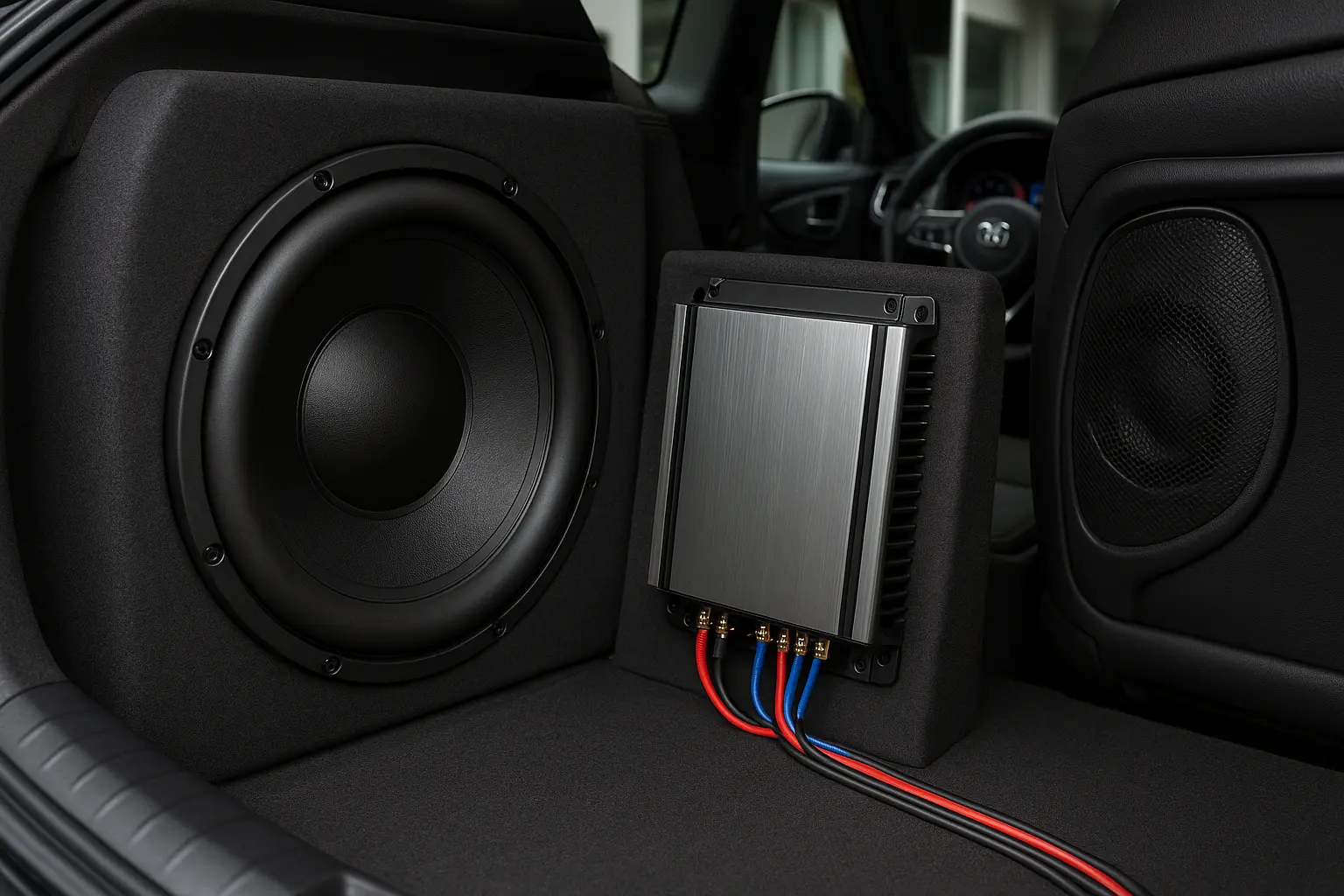
An amplifier (amp) powers your speakers and subwoofer more effectively than the stock head unit can. It boosts the signal strength, ensuring distortion-free sound even at high volumes.
Pro tip: Choose an amp that matches your speaker and subwoofer impedance (measured in ohms) to avoid imbalance.
Subwoofers
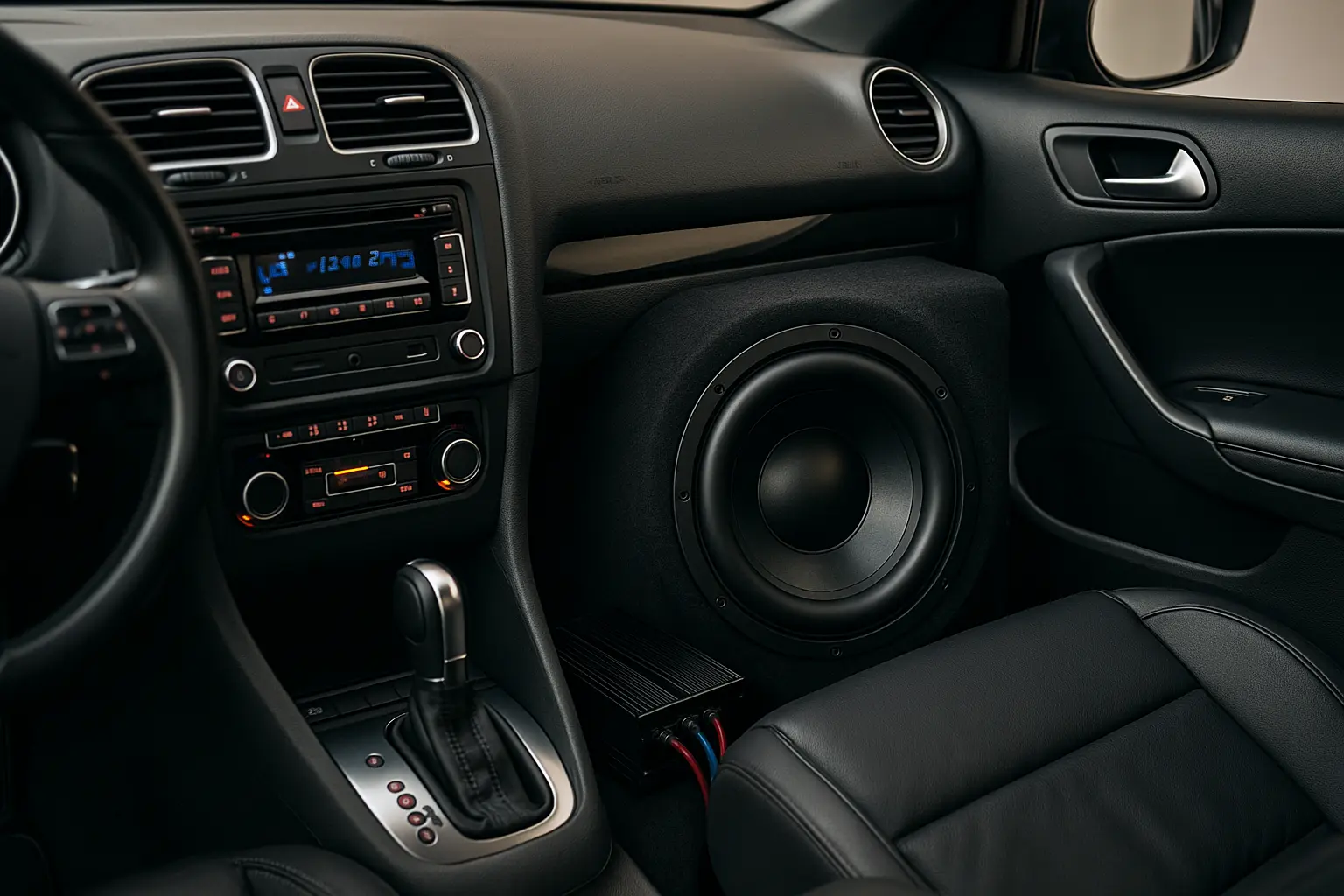
Subwoofers handle low-frequency sounds (bass). Even a compact sub can add fullness to your music. Choose between:
- Powered Subwoofers: Contain a built-in amp; ideal for limited space.
- Passive Subwoofers: Require a separate amp but offer higher power handling.
Head Units
The head unit (stereo receiver) is your system’s command centre. Modern replacements support touchscreens, smartphone mirroring, and lossless audio formats like FLAC.
If you’re driving an older vehicle, upgrading to a touchscreen head unit with Apple CarPlay or Android Auto can make your ride feel brand new.
Choosing the Right Audio Upgrade for Your Car
Identify Weak Points
Listen critically: Is your current system lacking bass, clarity, or volume? Identify which component needs upgrading most.
Set a Budget
You can achieve meaningful improvement at various price points:
- $300–$700: Entry-level speaker upgrades and better head units.
- $700–$1,500: Full speaker + amplifier combos.
- $1,500+: Premium systems with subwoofers and soundproofing.
Match Equipment
Ensure compatibility between components — mismatched power ratings can limit performance. Use RMS (Root Mean Square) wattage ratings for accurate comparisons.
The Best Car Audio Brands in Australia (2025)
Australia has access to top-tier international brands and local retailers offering custom-fit solutions. Here are the most popular and trusted names:
- Pioneer: Reliable, feature-packed head units and amplifiers.
- Alpine: Known for high-end clarity and build quality.
- Kenwood: Excellent Bluetooth connectivity and multimedia options.
- JL Audio: Premium speakers and subwoofers with powerful bass.
- Sony: Great mid-range options with easy integration.
- Kicker: Bass-heavy speakers for performance enthusiasts.
- Focal: Audiophile-grade sound with refined highs and deep lows.
DIY Car Audio Upgrades: Pros and Cons
Many Australians enjoy the satisfaction of upgrading their car audio themselves, especially those comfortable with tools and wiring.
Advantages
- Cost Savings: Labour costs in Australia can range from $150–$400 depending on complexity.
- Personal Satisfaction: Learn more about your car’s electronics.
- Customisation: Control every detail — wire type, mounting angle, and more.
Challenges
- Skill Level Required: You’ll need to understand impedance, power distribution, and wiring diagrams.
- Risk of Damage: Incorrect wiring can blow fuses, damage head units, or drain your battery.
- No Warranty: DIY installs often void manufacturer warranties.
DIY Tips
- Always disconnect the battery before installation.
- Use proper wiring kits with fuses.
- Apply sound-deadening material in doors to reduce vibration.
- Test each component before final installation.
If you’re confident with tools and have access to guides or videos, DIY installation can be rewarding. But if you’re unsure — or working with complex systems — professional installation is worth the investment.
Professional Installation: Why It Might Be Worth It
Professional installers provide expertise and peace of mind. In Australia, certified car audio specialists can tailor installations for your specific vehicle type and acoustics.
Benefits
- Precision Fit: Ensures no rattle, distortion, or wiring errors.
- System Tuning: Experts calibrate EQ, crossover, and gain settings for optimal sound.
- Warranty & Support: Many shops provide warranty on parts and labour.
- Integration: Professionals can maintain factory controls and steering wheel buttons.
Average Installation Costs (Australia)
- Basic Speaker Replacement: $150–$300
- Amplifier & Subwoofer Install: $300–$700
- Full System Upgrade: $1,000+
While the cost may seem steep, the results often justify it — balanced, distortion-free sound that elevates your entire driving experience.
How to Plan Your Car Audio Upgrade Step-by-Step
A good car audio system isn’t built overnight. Here’s a structured approach to make it worthwhile:
Step 1: Assess Your Vehicle’s Stock Setup
Know what’s currently installed. Many new cars use integrated head units tied into vehicle systems (like climate control), which may affect your options.
Step 2: Set Priorities
Decide what’s most important — deeper bass, better clarity, or loudness.
Step 3: Choose Components
Mix and match brands only if you know their specs align. Some enthusiasts prefer keeping the same brand for synergy.
Step 4: Plan Power Requirements
High-wattage systems may require an upgraded alternator, power capacitor, or second battery.
Step 5: Tune & Calibrate
Proper tuning matters more than raw power. Adjust equaliser settings, crossover points, and fade/balance for natural sound imaging.
Soundproofing and Acoustic Enhancement
Even the best system can underperform if your cabin acoustics are poor.
Why Soundproofing Matters
Australian roads are often noisy — coarse asphalt, wind, and engine hum all interfere with audio quality. Applying sound-deadening mats in doors, floors, and boot areas can significantly reduce road noise and improve bass response.
Recommended Materials
- Dynamat or STP Aero: Reduces vibration.
- Acoustic Foam Panels: Enhances midrange clarity.
- Mass Loaded Vinyl (MLV): Blocks outside noise.
Adding insulation improves your audio experience more than some electronic upgrades.
Connectivity and Smart Features
Modern car audio isn’t just about sound. It’s about integration and convenience.
Apple CarPlay and Android Auto
Many modern head units support smartphone mirroring. This means seamless access to Spotify, Google Maps, or Apple Music — all voice-controlled and distraction-free.
Bluetooth and USB-C
Fast pairing and charging ports are now standard. Look for multi-device Bluetooth connectivity if you share the car with others.
Built-in DSP (Digital Signal Processor)
DSPs automatically tune your system for your cabin’s acoustics. It’s like having a sound engineer in your dashboard.
Balancing Performance and Power Efficiency
Australia’s hot climate and long drives mean power draw matters. A high-power amp or sub can strain your alternator and battery.
To stay efficient:
- Use Class D amplifiers for lower heat and higher efficiency.
- Check that your system doesn’t exceed your alternator’s output.
- Upgrade your Big 3 wiring (battery-ground-alternator cables) if running multiple amps.
Common Mistakes in Car Audio Upgrades
Avoid these pitfalls to protect your investment:
- Overpowering stock wiring: Can cause voltage drops or short circuits.
- Ignoring polarity: Miswired speakers cancel each other out.
- Skipping soundproofing: Leads to rattles and distortion.
- Poor grounding: Causes amplifier noise or system shutoffs.
- Buying mismatched components: Always compare RMS, not peak power.
Maintenance and Longevity of Car Audio Systems
Your upgraded system can last years with proper care:
- Clean terminals and connectors every 6–12 months.
- Avoid maxing out volume for long periods — distortion damages coils.
- Store the car under shade; heat damages capacitors and cones.
- Update firmware on digital head units for bug fixes and compatibility.
A well-maintained system delivers consistent performance and protects your investment.
Final Thoughts: DIY or Professional?
Both approaches have merit.
If you enjoy hands-on projects and want to save costs, a DIY upgrade is achievable with patience and research. However, if you value time, precision, and professional tuning, investing in expert installation delivers the best results — especially for high-end systems.
Ultimately, the best car audio upgrade depends on your goals, car type, and budget. But one thing is certain — once you experience the clarity and richness of a properly tuned system, there’s no going back to factory sound.

Leave a comment
Your email address will not be published. Required fields are marked *